


Is the CG specified correctly in the manual?
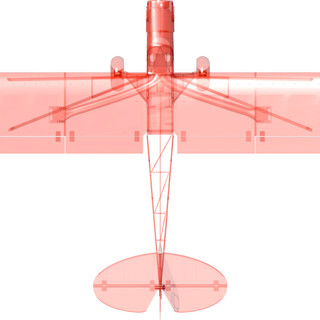

The center of gravity (CG) is one of the most important – and most frequently discussed – aspects of setting up an RC model airplane. Whether you're an experienced pilot or a beginner, you've probably heard discussions about whether the CG positions recommended by manufacturers are "correct." The short answer is: yes, they are absolutely correct (I'm referring, at least, to PLANEPRINT specifications) – but with one important caveat. The CG isn't a single, fixed point, but rather a range, and where you place your model's CG within that range can significantly affect its flight characteristics.
Let’s break down why the CG is so important, how it influences different types of flight, and why the “right” CG can vary from pilot to pilot.
Why the center of gravity is not a single point?
We determine the center of gravity through extensive test flights and not just calculations. Although manufacturers specify an exact center of gravity position based on these tests, the center of gravity is actually a fluid area. Where you set the center of gravity within this area depends on various factors, including the model type and your flying style.
Gliders: Performance vs. handling
In gliders, shifting the center of gravity rearward (toward the tail) generally improves performance. The model becomes more efficient and glides better. However, this comes at a price: the model becomes more sensitive to control inputs, especially the elevator. The pull-out arc from a steep dive (the so-called “pull-out” arc) becomes larger, sometimes even vertical, which can be challenging for less experienced pilots.
Motorized models: Aerobatics vs. 3D flying
With motorized models, the center of gravity can be precisely adjusted to suit your flying style:
• Classic aerobatics (FEARLESS, NOTOS): A center of gravity in the front stabilizes the model along the longitudinal axis, reduces nervousness, and facilitates precise maneuvers.
• 3D flight (SHARD): A center of gravity in the rear is preferable. This configuration ensures that the airflow remains over the wing until it abruptly breaks off. This is essential for advanced 3D maneuvers such as harriers, torque rolls, and snap rolls.
When pilots claim that the center of gravity specified by the manufacturer is incorrect, the problem is usually not with the center of gravity itself, but often with weight deviations or inaccuracies in construction. If your model is heavier than recommended, the wing loading increases and the model flies faster and requires more angle of attack. Depending on the wing profile, this can lead to more lift, which may require the center of gravity to be shifted forward slightly to maintain the correct balance.
Tip: Always check the weight of your model against the manufacturer's recommendations. If it is significantly heavier or lighter, you may need to adjust the center of gravity accordingly.
Flying Wings: Precision is crucial
With flying wings (JETWING, HALO, HALO+), the center of gravity is even more important. These models are characterized by their tailless design and short fuselage, which means that the flyable center of gravity range is much smaller compared to conventional aircraft. Even a small deviation can lead to dramatic changes in flight behavior:
• Too far forward: The model may become sluggish and require excessive upward trimming.
• Too far back: The model may oversteer the elevator and very quickly transitions into uncontrollable flight conditions.
Measure with special care!
Given the narrow center of gravity range, accuracy is crucial:
• Use a center of gravity gauge or a balanced ruler to ensure accurate measurement.
• Mark the exact position of the battery so that you always have the same CG.
• If your model feels “wrong” in flight, check the center of gravity before making any further
adjustments.
Find your perfect center of gravity´
The center of gravity positions provided are a good starting point, but they are not set in stone. Every pilot has their own flying style, and small adjustments can make a big difference in how your model flies.
Experiment safely:
• Start with the recommended center of gravity.
• Make small adjustments (only a few millimeters at a time – less so for flying wings) and test the model in flight.
• Pay attention to how the model responds to control inputs, especially when turning and recovering from dives.
Different pilots often describe the same model as being very different. This is very often due to the small detail of the optimal center of gravity position.


